Showing posts with label entheogens. Show all posts

Wednesday, November 2, 2022

You were there, in the labyrinth...

Stumbled across this song while stoned on my first batch of bhang that I made using cannabis leaves that my partner and I grew this year.  (For some reason that seems like an important detail.)  Although the song is called "You With Air", and that is the phrase being sampled, all I hear is "You were there, in the labyrinth..."  I'm going with it. 

The music video is very trippy. Esoptron/mirror vibes. 


Sunday, February 17, 2019

Anthesteria 2019

Pithoigia
The Opening of the Wine Jars


This was my 2nd Anthesteria away from my home state and my first Anthesteria in a New England climate. I was blessed to be able to spend some time outdoors each day. Although the weather was not ideal, it was not downright prohibitive or hostile, even though there have been days since then that could be described that way.

I began my Pithoigia just before sunset, at a small riverside park near my home. There’s a lot of snow on the ground still, although the day was unusually warmer (highly 30’s into the 40’s). It would have been smarter to have snowshoes, but I managed fairly well without.

At the riverside, I said some opening prayers and sounded my bullhorn a few times. I opened the first bottle of wine and shared it in libation on the frozen earth. There are no flowers yet, not even a hint of a sprout. But there is the dream of spring, the promise of it in the less-freezing weather, and certainly the desire for it. And of course, Dionysos can be found in every place and time. 

I walked and chanted, and suddenly remembered I had spontaneously altered a chant to Dionysos a couple years back specifically for this day. I can’t recall how that one went, be this one settled into:

“Come with the wine pots,
Come with the flower petals,
Come with the restless dead,
Dionysos, come!

“Come Anthesterios,
Come to us Bakcheios,
Come to us Lusios,
Dionysos, come!”

I did some tree-pulling at the top of a small hill -- something I’ve experimented with here and there, having found it depicted in Minoan art. We can only speculate on what it meant to the Minoans, but I’ve found it to be a nice way to commune with the land and trees, especially while dancing outdoors, but also in more quiet meditative moments. “Tree-pulling” is a weird term yet oddly descriptive. I usually grasp a smaller tree by its trunk and let the rest of my body fall back and sway back and forth, usually switching hands on the upswing. It’s especially thrilling if you do it near a cliff’s edge or on a hill. Tree-pulling is not unlike swinging but without a rope, expressing a natural rhythm that thrums under the surface. The practice invites your consciousness into tree-time, to notice things like the wind or the way the bare branches fractal against the cloudy sky. Old and elemental are these mysteries of the Mountain Mother.

As I walked back, I whispered to the trees (modern maenad to the Nymphae): “Dionysos is here!”


In a stroke of good fortune, I had acquired about $50 worth of fresh flowers for free from my work at the last minute, and it made my shrines at home quite beautiful.


A part of me always hopes to create something lovely on Anthesteria (it’s when I’ve made some treasured devotional pieces in the past). It doesn’t happen every year, though, and I found myself just needing to unwind and let go this time, so I honored that inclination. I played around with watercolors a little but mostly I just spent the evening listening to music and drinking an amazing bottle of Amarone wine I’d been saving for over a year.

My feast foods were wonderful. One of the reasons I got a later start in the day was that I spent time making mostly-homemade baklava (I bought the phyllo dough.) I made it because I adore it, but it’s also a perfectly symbolic dessert for Anthesteria. Layers of dough and chopped nuts akin to layers of the soil and gravel and earth. Then soaked in honey and a bit of rosewater to symbolize the flowers. I also added chopped figs, for even more of a Dionysos association. It’s the first time I made it and it turned out wonderfully; I think I can make it even better next time now that I understand the process better.


Aiora & Khoes
The Swing & the Wine Pitcher


Traditionally, I spend Khoes in silence until my ritual in the evening, so that my words are reserved to exclaim the epiphany of Dionysos. But it has other benefits, too. It releases the pressure of much mundane interaction, and allows me to keep my mind on what’s holy. Throughout the day it’s as if I’m gradually disengaging with the “normal” world and by the time night rolls around I’ve already got a solid foot in the spirit realm. It’s not a bad way to honor the hanging girls for the Aiora either, which is what I spend the first half of the day doing.

I made paper cut outs of the hanging girls this year instead of the stick and yarn figures I’ve made in the past. I also learned to tie a noose-knot with the rough craft twine. I was very happy with how they turned out, and putting them on paper allowed me to write on them, so I wrote poems as well.

Remember Erigone
Beloved of Dionysos
Grief-struck
She swung on the tree
by her graceful throat
suspended like a ripe fruit
between
earth and starry heaven

Remember Ariadne
Beloved wife of Dionysos
Keeper of holy mysteries
She surrendered her mortal body
to her immortal daemon
on the isle of Naxos
So she might wear a crown of stars

Remember Arachne
Beloved of Dionysos
Weaver who knew her worth
She pays penance web by web
The Spider Queen
of primal wisdom.


I went to a park I hadn’t been to before, nestled in a quiet neighborhood. It wasn’t exactly private but probably due to the chilly weather, I had the place to myself and no one bothered me. I poured out wine, listened to music I associate with the hanging girls while swinging between setting sun and rising moon. How is it that this always strikes me anew, every year... This feeling of being in the axis of a lunar/solar seesaw?

I took breaks to hang the girls, one by one, and place a daffodil in the snow at the base of their trees. A bit of sympathetic flower magic, if you will. Some red wine in the snow like spilled blood. I stayed until the bare trees took on that eerie quality of negative space, and the stars started peeking out through the spidery branches. By that time the moon seemed impossibly bright and I was fascinated by the way the moonlight was casting tree shadows on the snow -- not something I had experienced before.


I prayed to the land spirits for a time, and then returned home to prepare myself for my Khoes ritual.

And what can I say of that, that could possibly do it justice? I am reminded that there is always more levels to ekstasis, and there is always more to surrender. There is the god of many masks, and then there is the god triumphant and manifest - without metaphor - who simply is and is right fucking here.

Alethia meets soma.

I am filled with awe.


Khutroi
The Pots


On my way to the graveyard, I couldn’t help but notice how the light seemed different. It seemed to glow a little brighter, as if I was seeing reality through a different filter.

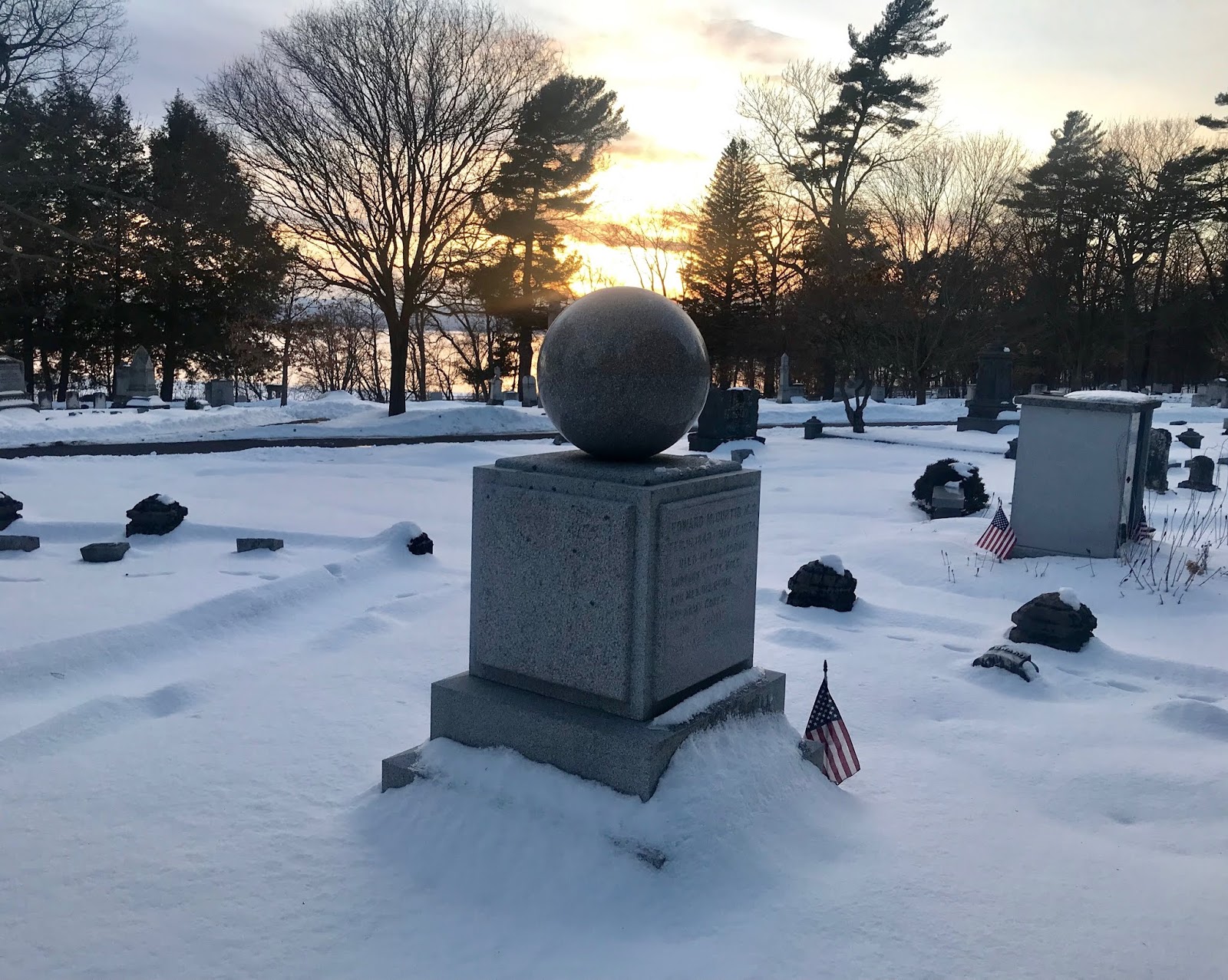
The cemetery was a large and beautiful lakeside one. New England cemeteries are something else. Older, of course, and more atmospheric, with a lot of unique memorials. Unfortunately there was so much snow I couldn’t wander as freely amongst the tombstones as I normally would have, and it was colder than the previous two days so I didn’t linger overlong. But I did say a prayer to Hermes, poured out wine and left flowers in various places - and of course left the beans and grain panspermia I had cooked for the dead.


In the evening I went to a wine tasting party I had been invited to by a coworker. (Believe it or not, I nearly declined the invitation because I was going to be too busy observing a Dionysian festival… before realizing how ridiculous that was.) It was great fun. It was a group of 8-10 people coming together for the primary purpose of sharing a love of wine for a couple hours. And for me, there’s nothing quite like the giddy buzz you get from tasting a variety of wines. The most unusual was a 10 year old sparkling rosé that smelled like a sweet port but tasted like a dry champagne with strong notes of wild mushrooms!

Back at home I wrapped things up by burning some banishing herbs and bidding the keres to depart. And that was my Anthesteria.

Festivals that have been celebrated over many years tend to invite you reflect on the past and how things have shifted and evolved in life in general. But I've also found that they set the tone for what's to come. That being said, I'm very much looking forward to seeing what the rest of the year has in store.

Tuesday, April 14, 2015

Hunt Festival

Last Monday and Tuesday was the Hunt Festival for the Thiasos of the Starry Bull.  It’s a brand new festival for our emerging tradition this year, and we came up with some ideas for celebrating based on where it fell in our calendar, since it’s unfixed and, like our month names, based upon divination.  This year, it’s in the springtime right on the tail of Easter in the month of Dionysion (he of Mount Nysa), so an Orphic egg hunt seemed appropriate!


I had been having nudges the week prior to go visit my mountains.  One of these nudges came in the form of a deja vu-like intrusion upon my thoughts while I was at work, which I’d never quite experienced before from the spirits of a place.  Not words or even images exactly, but the total feel of those particular cliffs and skies just washed over me.


The weather in the city and the valley has been getting very warm, so I didn’t quite expect how chilly it would still be up there.  I even found a bank of snow on the winding road up to the rim.  At the top, it was very windy but beautiful.  I went not to the most sacred of places where Ariadne’s festival and my wedding took place, but to the adjacent place where I went on my husband’s birthday after his death… I think of it as a place of turning points for me, and that seemed appropriate on this day.  

I hugged the trees and greeted the Mountain Mother.


The location I ended up choosing for a shrine was inside a little grove of baby pine trees.  They reminded me of a small labyrinth because of their meandering configuration.  It also seemed 5-10 degrees warmer there, which seemed like a good sign as well.


From the ground I gathered some moss, pinecones, a piece of blackened wood, shed bark from a pine tree, pine needles, small flowers (there were only a few tiny ones), and some tufts of mullein.  On the piece of wood I placed 2 raw eggs into its natural grooves. The rest I arranged around it into a rough likeness of a bearded image.


There was a precise moment, as I finished setting up the shrine and getting the last supplies, where a felt a shift and the forest was suddenly full of presence. It actually stopped me in my tracks for a moment.


I began by intoning Dionysos’ name.  Over and over.  


DEE OH NU SOS. DEE OH NU SOS. DEE OH NU SOS.


Then called to him in spontaneous words, heart-driven and flowing, sometime shouting.  As it tends to happen with those bursts of inspiration, I cannot remember them all now but I wish I could.   On the other hand, I feel like their surrender are an offering as much as the wine poured on the ground.  I called on the Mountain Mother next, then offered smoke and libations and toasts of wine to all the gods and spirits of the Starry Bull.  And then to Spider, because one of her children had crawled into my drum as I did this and had to be gently evicted so I could use it to drum up some energy.


Using the dice I consulted the Oracle of Dionysos Bakcheios - I started with 12 slips of paper, one line of oracle for each egg, then once that was completed I felt compelled to do another set so each egg could have 2.  I also created an extra slip of paper that just said “Dionysos”. My thought at the time was that it would add a special significance to that answer and question.


My overturned drum became the vessel from which I could draw the folded slips of paper and distribute them.  Then it was my basket for the eggs themselves.  I smoked some diviner’s sage.


As I hid the eggs, I stayed in a close radius to the shrine and hid them in such a way that they would be in plain sight from the right angle. But I didn’t think too much about this and was definitely in an altered state as I did it.  Back at the shrine, I blew the bull's horn three times. I wrote down a question, asked it aloud, then spun around in a circle and went the direction of whichever way I was facing to search for the answer, choosing the egg I saw first.  Then I would come back to the shrine, open the egg and write down the answer and do it all over again.  But I hid them from myself better than I thought.  It took a really long time to find the 10th egg, and when I did it was the one with Dionysos, so that seemed like a good indication to stop -- especially since the sun was beginning to go down at that point.  


Some of the answers were clear, some were less clear for now but even those had definite significance.  The last 2 eggs are still up there somewhere... their answers apparently meant for another time or person.


Before I closed the ritual, I took an extra raw egg I’d brought and rubbed it over my body as I prayed for cleansing, release and healing.  It didn’t start as a chant but it built up into one… until I was shouting and then with one forceful movement broke the egg against the base of the shrine.


I took a picture of the darkening sky before I left.  


I regretted not staying to see all the stars come out, but I hadn’t brought warm clothes as it was and the temperature was dropping quickly.  But spring has barely begun, and I’m sure I will be drawn back before too long.


Wednesday, December 3, 2014

Maenadic Aftermath

sore in strange places, hands shaking, skin raw and spirit pricked,
whole body spent as with lovers exhaustion
lungs fold and unfold like bird wings with whatever you smoked, whatever you confessed.
Io Bakchos, Io Bakchos

you feel like an inspired incident, something that happens to a room or a time --
a storm that, once passed, is only notable in its wreckage.
moments return in infrequent flashes
pantheric pacing
a rumble of music shaking your core
dancing and falling
into some chasm of sorrow
was there a logical progression?  you can’t remember,
but after some strike, you were suddenly weeping, from the deepest part of you,
pleading and begging for the god to take your heart  
JUST TAKE IT!!!
and you kept diving back in,
mumbling maniacally, “I must be crazy…”
and then the hit came where your body fell away,
and you didn’t feel your heart, didn’t feel anything at all --
certainly not afraid,
in spite of being forced without form through teethed corridors
with their guardians and serpents and many-fanged questions.
your voice was clear as a bell, as if your voice was always the most real part of you all along--
(strangely beautiful, the way it rang incorporeal)
“I am a child of earth and starry sky. Bakchos himself has set me free.
Let me drink from the well of memory.”
you didn’t remember until you said it, but yes, you were quite thirsty indeed,
and then you fell--back into the thrust of life
back into the god’s embrace, back to the surface, this time...

That was nothing. There’s so much deeper to go.
I know.

you’re still talking to yourself like this, because it’s all too fresh.
you lick your lips, bitter remembrance
(so that’s what happens when you drink your past)
sometimes your hands seem so old

So did you learn more about yourself, like you wished?
the question hangs like a girl in a tree, mostly motionless
in the dissipating smoke and an inhaled breath.
ghostly memories of strange images and sensations still flicker around your periphery.
Not really, to be honest.  I have a lot more questions.
I’ll drink to that.
exhale.
Evohe.

Tuesday, August 12, 2014

Hekatesia

8/12-8/13

I began my observance of the Hekatesia a day early.  Was slow waking up, getting around, with little to do in the early part of the day except to get ready for the night.  Felt distracted.  Even the weather was restless, with a storm kicking up.  It intensified into a frenzy for just minutes, but long enough; the wind seemed so brutal that I went out to check on my plants, only to find this…

IMG015

It is hard to explain the significance of this in a few words. My dearest san pedro.  A gift, a teacher, who has become a symbol of my deepest love, my deepest grief, even my current struggle with meaning, and my journey of the last 4 years.  She will be all right.  In a slightly different form, perhaps, not unlike me.  But I still cried for her.  (Again. But our history is a whole other story…)

I went dancing, alone.  I remember feeling like my dancing was taking on new purpose. Certainly it’s changed it’s tone.  (Are my ballroom days over? I’m still working that out.)  But it was more like I was making doorways for the dead and the spirits.  Stomping ethereal ghost tunnels into the dance floor.  (Oops?)  Let it be said, wise or no, I did it with gusto.

I was drawn into being social with strangers.  The conversation quickly turned to entheogens.  Not my doing, though no doubt I encouraged it.

More dancing. Waltz of the light fish.

When that was over and I was home again, I packed up some offerings and took a walk (umbrella in hand for the drizzle of rain), keeping an eye out for whatever crossroads looked best.  I found one and knelt down at a tree. Lit a candle, a stick of incense.  Left a plum, a fig, wine, sweets.  Called upon Hekate.  In my spontaneity, in my tired and tipsiness, I didn’t quite know what I was going to say, so my words were clumsy.  “My fear is… nothingness. My fear is… meaningless.”  Hearing my own words I chuckled.  “Well, that’s true. Everything has a double meaning, doesn’t it?  Or a triple one.”

Not looking back was difficult, but I did not.

The next day I had to work, but I didn’t feel quite finished.  I went to my pithos, finally.  For I had done an elaborate ritual to bless it long ago but for some reason had held myself back in using it. Other fears, here, perhaps?  So now, I said a prayer to Hekate and drew a devotional activity.  “Take a meditational walk and look for omens.”  Yes, I could do this.

On my break, I went walking around the outside grounds of my work at night.  I’d never quite explored it, but turns out it’s pretty damn spooky and full of little crossroads.  I saw at least 10 lizards, and heard others I couldn’t see.  And each time I reached a crossroads I’d watch the lizards’ movement and go the direction it indicated.  If I was unsure there was often another to reinforce it.  The uneasiness I felt in some of the darker areas came as a surprise to me, because I didn’t think there was much left in me that was afraid of the dark, or the unknown.  On one of my last passes before I had to head back, I passed a streetlight which suddenly went out as soon as I walked up to it.  I turned towards the now darkened streetlight and my breath caught as a realized I could see not one, but 3 shadows of myself before me.  I pondered these and turned around to see that I had stopped (without realizing) at the top of a T of another crossroads.

Once I continued, another streetlight went out.  I acknowledged, with an odd sort of appreciation, that I have more fears that I have still to uncover, though I may not be able to name them yet.  I saw a stone that almost looked like a toad.  I picked it up and left it at the the point where I started, before going back inside.

[Cross-posted at the Boukoleon.]

Tuesday, June 24, 2014

Her Other, Blue-Grey Brother


The Myth


Apollodorus 3.3.1
... But Glaucus, while he was yet a child, in chasing a mouse fell into a jar of honey and was drowned. On his disappearance Minos made a great search and consulted diviners as to how he should find him. The Curetes told him that in his herds he had a cow of three different colors, and that the man who could best describe that cow's color would also restore his son to him alive. So when the diviners were assembled, Polyidus, son of Coeranus, compared the color of the cow to the fruit of the bramble, and being compelled to seek for the child he found him by means of a sort of divination. But Minos declaring that he must recover him alive, he was shut up with the dead body. And while he was in great perplexity, he saw a serpent going towards the corpse. He threw a stone and killed it, fearing to be killed himself if any harm befell the body. But another serpent came, and, seeing the former one dead, departed, and then returned bringing a herb, and placed it on the whole body of the other; and no sooner was the herb so placed upon it than the dead serpent came to life. Surprised at this sight, Polyidus applied the same herb to the body of Glaucus and raised him from the dead.
Minos had now got back his son, but even so he did not suffer Polyidus to depart to Argos until he had taught Glaucus the art of divination. Polyidus taught him on compulsion, and when he was sailing away he bade Glaucus spit into his mouth. Glaucus did so and forgot the art of divination.

Hyginus’ Fabulae [136] CXXXVI. POLYIDUS
When Glaucus, son of Minos and Pasiphae, was playing ball, he fell into a jar full of honey. In the parents’ search, they made inquiry of Apollo about he boy. Apollo told them: A prodigy has been born for you. Whoever explains it will restore the child to you. Upon hearing this reply, Minos began inquiring from his people about the prodigy. They told him that a bullock had been born which changed colour three times a day, every four hours - first white, then red, then black. Minos then called together the augurs to explain the prodigy, and when no one was found who could do so, Polyidus, son of Coeranus, showed that the bullock was like a mulberry tree, for first its fruit is white, then red, and when ripe, black. Then Minos said to him: “According to the words of Apollo, you should be able to restore my son to me.” While Polyidus was observing omens, he saw an owl sitting over the wine-cellar and putting bees to flight. He interpreted the omen, and brought out the lifeless boy from the jar. Minos said to him: “You have found the body. Now restore life to it.” When Polyidus said this was impossible, Minos ordered him to be shut in a tomb with the boy, and a sword placed there. When they had been shut in, a snake suddenly made for the body of the boy, and Polyidus, judging the creature whished to devour the body, suddenly drew the sword and killed it. Another snake, seeking its mate, saw that it was dead, and came and brought a herb, and its touch restored life to the dead snake. Polyidus did the same. When they called out from within, a passerby reported it to Minos, who opened the tomb and found his son safe. He sent Polyidus many gifts back into his country.

Robert Graves’ The Greek Myths
90c. Glaucus, while still a child, was playing ball one day in the palace at Cnossus or, perhaps, chasing a mouse, when he suddenly disappeared. Minos and Pasiphae searched high and low but, being unable to find him, had recourse to the Delphic Oracle. They were informed that whoever could give the best simile for a recent portentous birth in Crete would find what was lost. Minos made enquiries and learned that a heifer-calf had been born among his herds which changed in color thrice a day - from white to red, and from red to black. He summoned his soothsayers to the palace, but none could think of a simile until Polyeidus the Argive, a descendant of Melampus, said: ‘This calf resembles nothing so much as a ripening blackberry [or mulberry].’ Minos at once commanded him to go in search of Glaucus.
d. Polyeidus wandered through the labyrinthine palace, until he came upon an owl sitting at the entrance to a cellar, frightening away a swarm of bees, and took this for an omen. Below in the cellar he found a great jar used for the storing of honey, and Glaucus drowned in it, head downwards. Minos, when this discovery was reported to him, consulted with with the Curetes, and followed their advice by telling Polyeidus: ‘Now that you have found my son’s body, you must restore him to life!’ Polyeidus protested that, not being Asclepius, he was incapable of raising the dead. ‘Ah, I know better,’ replied Minos. ‘You will be locked in a tomb with Glaucus’s body and a sword, and there you will remain until my orders have been obeyed!’
e. When Polyeidus grew accustomed to the darkness of the tomb he saw a serpent, approaching the boy’s corpse and, seizing his sword, killed it. Presently another serpent, gliding up, and finding that its mate was dead, retired, but came back shortly with a magic herb in its mouth, which it laid on the dead body. Slowly the serpent came to life again.
f. Polyeidus was astounded, but had the presence of mind to apply the same herb to the body of Glaucus, and with the same happy result. He and Glaucus then shouted loudly for help, until a passer-by heard them and ran to summon Minos, who was overjoyed when he opened the tomb and found his son alive. He loaded Polyeidus with gifts, but would not let him return to Argos until he had taught Glaucus the art of divination. Polyeidus unwillingly obeyed, and when he was about to sail home, told Glaucus: ‘Boy, spit into my open mouth!’ Glaucus did so, and immediately forgot all that he had learned.
g. Later, Glaucus led an expedition westward, and demanded a kingdom from the Italians; but they despised him for failing to be so great a man as his father; however, he introduced the Cretan military girdle and shield into Italy, and thus earned the name Labicus, which means ‘girdled’.

Daniel Ogden’s Greek and Roman Necromancy
The Greeks used honey as a general preservative, and in particular made use of it when they wished to embalm their dead...  Other Greek traditions preserve a link between honey, resurrection, and necromancy. Thus the Cretan king Minos's son Glaucus disappeared and died by falling into a pot of honey. Polyidus ("the much seeing"), commissioned by the king to find him was led to the jar by a dream. Minos then ordered Polyidus to restore the boy to life, and, when he could not, had him immured with him in his tomb. A snake then brought and demonstrated a magic herb, which Polyidus used to resurrect Glaucus. The honey was evidently integral to the resurrection, for the summary proverb said, "Glaucus drank honey and rose again."

The Mushroom

Terrence McKenna’s Food of the Gods
Let us attempt to analyze this peculiar story. First of all, it is necessary to comment on the significance of the names of the two main characters: Polyidos is clearly “the man-who-has-many-ideas,” and Glaukos simply means “blue-gray”. The meaning of Glaukos was for me the entry point into the intention of the myth. It is well known among mycologists that the flesh of Stopharia cubensis and other psilocybin mushrooms has the property of staining a bluish color when bruised or broken. This blue staining is an enzymatic reaction and a fairly reliable indicator of psilocybin. Glaukos, the youth who is preserved in the jar of honey, seems symbolic of the mushroom itself…
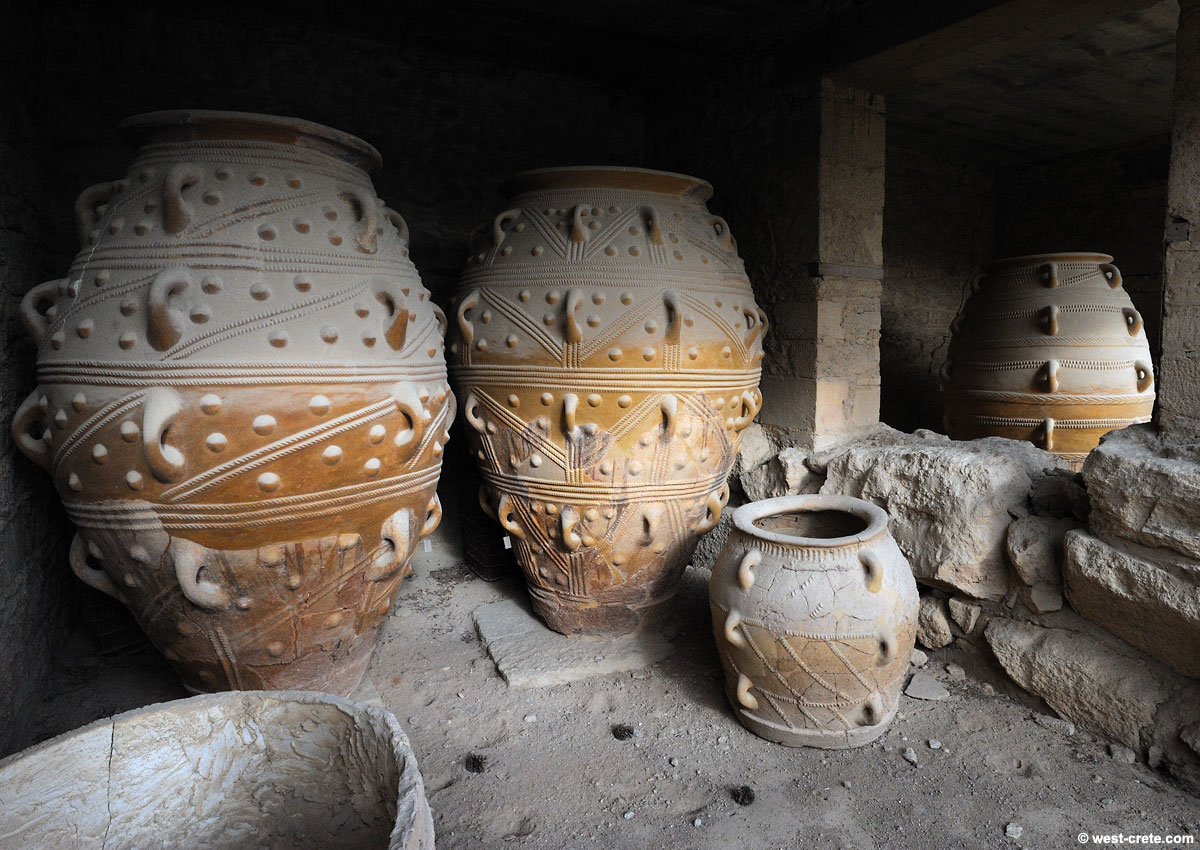
    The antiseptic properties of honey have made it a preferred medium among many peoples for the preservation of delicate foods. And in Mexico honey has long been used to preserve psilocybin-containing mushrooms. The fact that Glaukos, the blue-gray one, fell into a honey pot...and was preserved there until the time of his resurrection seems highly suggestive. Herodotus mentions that the Babylonians preserved their dead in honey, and the use of large storage vessels, or pithoi, for burying the dead was widespread in the Bronze Age Aegean. The motif of cattle is present in the story in the bizarre section concerning the simile of the three-colored cow and the need to demonstrate linguistic facility as a precondition to being able to find the lost child. And the serpent, familiar from the Genesis story of Eden, makes a cameo appearance--and once again proves to have accurate and secret information concerning plants, especially plants that confer immortality. Polyidos, the shaman figure, uses the information gained from the serpent to return Glaukos to life; the information leaves Glaukos and returns to his departing teacher. This may refer to the elusive nature of the visions glimpsed during mushroom intoxication. […] all the motifs of a barely remembered mushroom cult are there--themes of death and rebirth, cattle, serpents with herbal knowledge, and a blue-gray child who is preserved in honey.

Bruce Rimell’s “Minoan Honey : The Bull, The Mushroom And The Mistress Of The Dance” (Essay & Accompanying Art)  

We also see here an explanation for Glaucos being the ‘son’ of the Minos-Asterion bull (or indeed of the Moon-Cow Pasiphae). As mycologists have pointed out, many psilocybin-bearing mushrooms are found naturally growing on the dung of cattle. The Minoans cannot have missed this important aspect of the plant’s culture – indeed this may have been how they or their Neolithic forebears discovered and cultivated this sacrament – and so encoded this detail into the myth as Glaucos son of the cow or bull. It is also noteworthy to consider that Glaucos has to enter the honey-pot, past the deathly owl and into the Underworld (the cellar), in order to transcend death. This resonates strongly with the honey given to the Mistress of the Labyrinth, suggesting the little son was only a sacrament once he had been transformed or preserved.

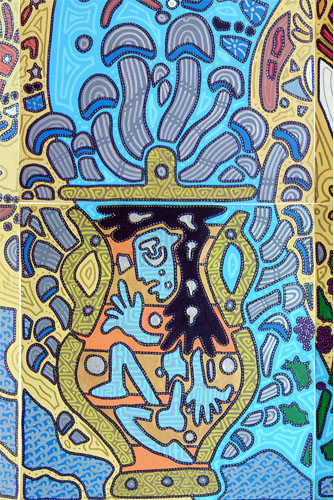
glaucos in the honey pot
“Glaucos” by Bruce Rimell

My Thoughts

My own introduction to Glaukos was through the above quoted book by Terrence McKenna, which also quoted Apollodorus in full.  I was quite stunned that this other brother of Ariadne had completely escaped my notice until then.  (Pretty sneaky of him.)  The second quoted source comes from an essay by Bruce Rimell which gets in-depth and speculative, but nonetheless fascinating reading.  He even provides a theory as to how Glaukos son of Minos might be connected to Glaukos the sea-god (who otherwise are very different characters, excepting the same name and both having a magical herb being a part of their stories.) If you look at nothing else in the essay, at least check out the artwork and the extensive photo essays after the bibliography.

Now, I want to highlight some observations and questions about the myth of Glaukos.

Polyidos: Did you catch that he was the descendant of Melampos?  I didn’t until recently, probably because Melampos was not strong on my radar until my involvement with the Thiasos of the Starry Bull, where he is recognized as one of the Dionysian heroes.  Melampos was also a seer and prophet, and spread the worship of Dionysos.  Both Graves and Hyginus note that Polyidos character was sometimes replaced with Asklepios.

Omens: The omen which leads Polyidos to the cellar is an owl frightening a swarm of bees. Although some versions gloss over this bit completely, Graves’ explains in his notes that the word for owl is “glaux”.  In other words, this is a pun for Glaukos name, and the bees symbolic of his falling into honey in the cellar on which the owl is perching.  (There could be double symbolism there in the owl being a bird of death/wisdom setting the bees [soul] to flight.)  I love this glimpse into the way that omens were interpreted back then.  I can’t recall if I’ve ever seen an omen that was a pun, which PROBABLY means I’m not paying enough attention.

Bees & honey:  A lot has been written about the importance of honey and bees in ancient Crete, and it is represented often in their art.  Honey was not just a food or commodity--it’s an immortal substance, a divine nectar, flowering nature itself, transformed into something entwined in both life and death.  Honey had medicinal and magical properties, could be a preservative or embalming agent, and could be transformed into intoxicating mead. There are sources that indicate that the Greeks thought of bees as souls and they were thought to be born from the carcasses of bulls--their other most sacred animal.  That Glaukos drowns in honey, and not in a pool of water or the ocean, would appear to point to some deeper symbolism here.  Dionysos has several associations with honey as well.

The color-changing calf:  Of all the details, this one seems most befuddling to the authors who provided possible interpretations to this myth.  But as these three colors together seem to crop up in shamanic and mystery traditions, it didn’t seem so strange to me.

Animals and plants:  This short myth has no less than 4 significant creatures in it. The calf, the owl, the bees and the snakes. And every single one is revealing some sort of knowledge.  And then there is the enigmatic, unidentified plant.  Was it unnecessary to identify it because it the plant itself was also one of its main characters?  Are these two snakes the same held by the Minoan snake goddess/priestess figures? Also noteworthy is the fact that the magical herb did not have to be ingested, simply placed on the body. But as Ogden mentioned in his book, it was not just the plant, it was also the honey that had restorative powers.

Resurrection:  In Greek mythology, Glaukos is one of the few people to be successfully returned from death to life.  Usually this required an actual journey by a god or hero to the Underworld.  And yet Polyidos is able to do this with just an herb revealed by a snake.  Hmmm….

More mushroom connections:  It’s a seemingly random detail, that Glaukos was eventually known for introducing a military girdle to Italy.  Unless he already had the nickname “girdled” and the detail tacked on later by way of explanation?  Maybe it’s a stretch, but it occurred to me that mushrooms have a skirt or girdle, called a ring or annulus, once the cap umbrellas out from the stem.  Rimell came to this same possible conclusion.  
    If Glaukos were a mushroom, consider the cycle it creates... one where a swarm of bees is born from the carcass of a bull, which goes on to create the sacred honey, which can be used to preserve the mushrooms, which themselves grow from the dung of cattle.  Another bit of Greek lore about mushrooms is that they were formed from lightning or thunderbolts hitting the ground, so that mushrooms are somehow connected to a Dionysian cult is perhaps not too far-fetched.


As much as I adore the idea of connecting my enthusiasm for mushrooms to my devotion to Dionysos, Ariadne and the whole bull mythos, I’m not entirely convinced Glaukos is a mushroom personified.  Regardless, I have this special fondness for his myth (what survives of it) and its mysterious implications.  Eventually I hope to share some UPG about Glaukos, but I didn’t want to go longer without introducing him, especially since my fascination of him goes back a couple years.  My husband and I went down the rabbit hole of this myth together in the year before his death.  So, I’ll leave you with a poem he wrote.


SONICRY

The only one who could ever teach me
was a blue honey-soaked son
He sighed like a maiden and held me like a mother
crooned a crone’s crow
a staggering echoing song
soaked me to the soul
He laid claims to the plains where every bull stamped its hoof
He lived under the trees of the forest floor
Glaukos son of Minos
brother of Dionysos
I hear your eyes when they are open
I feel your mouth when it’s closing
You’re closing in on me
My mouth fills with energy
I drown in your honey